

Bridging the Generational Gap: TBCC’s Workshop Puts Design Thinking to Work
Tunis, Tunisia – 2 September 2026
Every workplace today has people who grew up using tools, different references and different ways of working. But, how often do companies really take the time to learn what each generation has to offer instead of just making guesses?
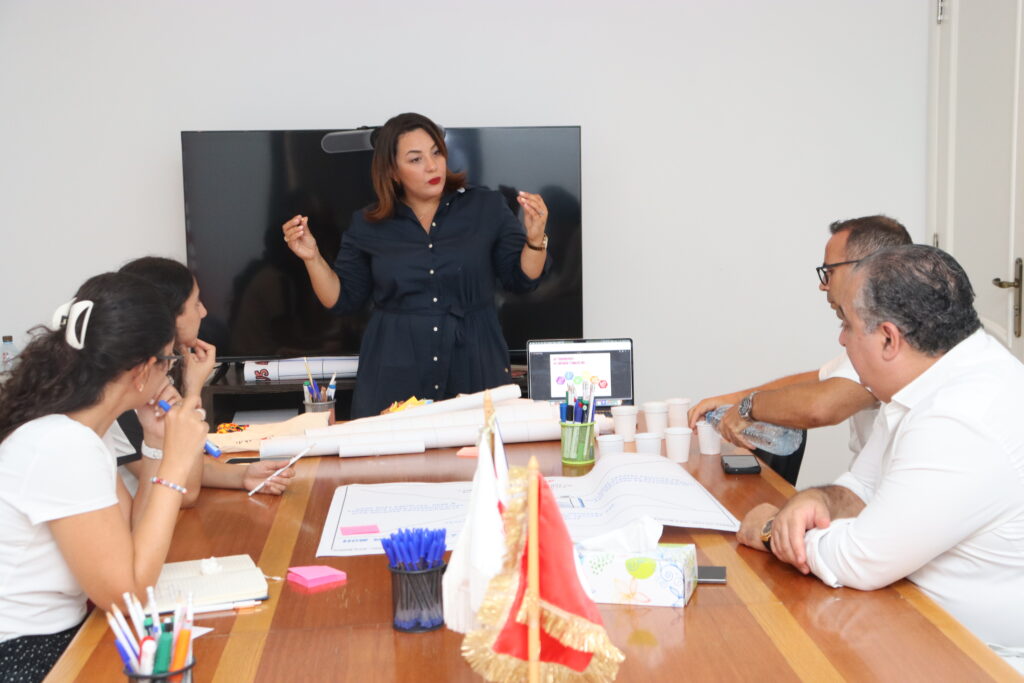
That was the question during a workshop organized by the Tunisian British Chamber of Commerce (TBCC) on September 2nd.
The event was called “Leading Across Generations: From Boardroom Wisdom, to Gen Z Agility.” It was led by Professor Mariem Ben Tanfous.
Identifying the Gap:
Experienced employees bring years of judgment, deep client ties and a great knowledge of how the organisation runs. Newer employees on the hand often move faster and feel at home with the newest digital tools.
The problem is not that one group is more valuable than the other. It’s that these strengths rarely become visible to one another. Without a shared understanding of what each side brings, teams can fall back on stereotypes instead of real collaboration.
Design Thinking:
To move past the theoretical side, the session was structured around a Design Thinking framework applied to real workplace scenarios involving generational tension. Rather than lecturing participants on the “right” answer, this format pushed them through the process themselves: first mapping out where friction tends to arise between age groups, then working together to design practical solutions for smoother communication and teamwork.
Seeing Through Someone Else’s Eyes
One idea that resonated throughout the session was the concept of cognitive empathy. It is essentially the skill of stepping into someone else’s shoes and understanding how they read a situation, even without feeling exactly what they feel. When this skill gets applied to the workplace, it reframes generational differences: rather than treating them as friction to manage, participants were encouraged to see them as a starting point for stronger collaboration and mutual understanding.
A room full of perspectives:
The mix of participants was itself part of what made the session work. Attendees came from a wide range of professional backgrounds, and that diversity translated into a genuinely varied conversation, with each person contributing a different angle on how generational dynamics play out in their own day-to-day work.
By the end of the session, the takeaway was not a checklist to follow but rather a mindset shift: generational differences aren’t a problem to be solved, but a resource that, once understood, can make teams noticeably stronger.
For more updates and photos, follow the Tunisian British Chamber of Commerce on LinkedIn, Facebook and Instagram.